I hope everyone has a wonderful 2024! This year we stayed in China and cerebrated the new year with my family!
We were so lucky that we could enjoy Osechi ryori – a traditional Japanese New Year lunch – at home that I ordered from a local Japanese restaurant. I will leave the Japanese restaurant information below.
Tsukuji Japanese Restaurant (筑地日本料理(太原街南二马路店)
Address: 辽宁省沈阳市和平区同泽南街37号(城建商务公寓西门)
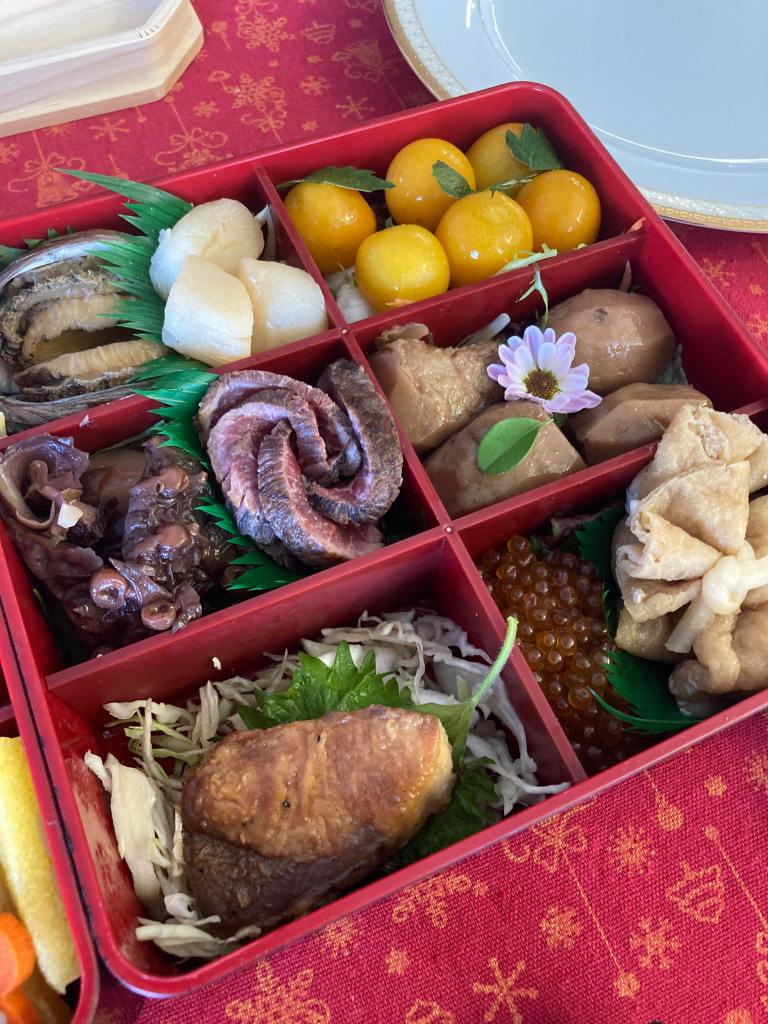
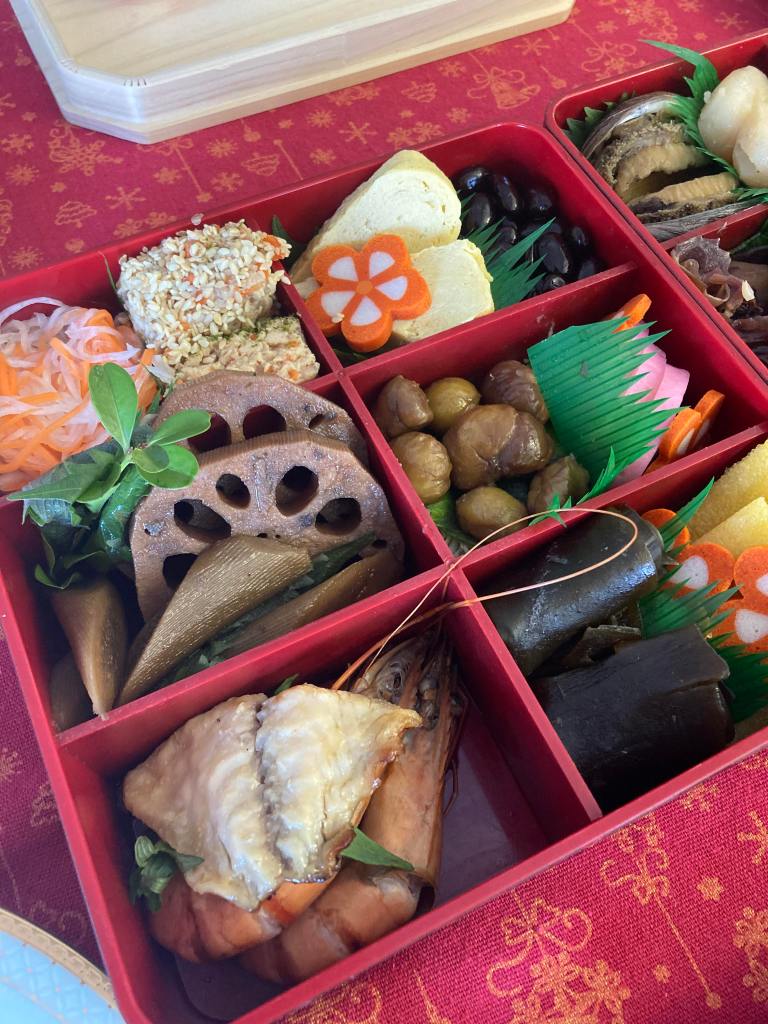
Today, I would like to show you several Wagashi, traditional Japanese sweets, that I made for celebrating the new year.
One of them is called “Hanabira mochi”. It literally translates to a petal flower rice cake. Hanabira mochi is sweet miso paste and caramelized burdock wrapped with soft sweet mochi called Gyuhi mochi. You can make them at home if you have all the ingredients, but if you would like to buy them, they are only available for purchase at Wagashi stores in Japan between the end of the year and mid-January.
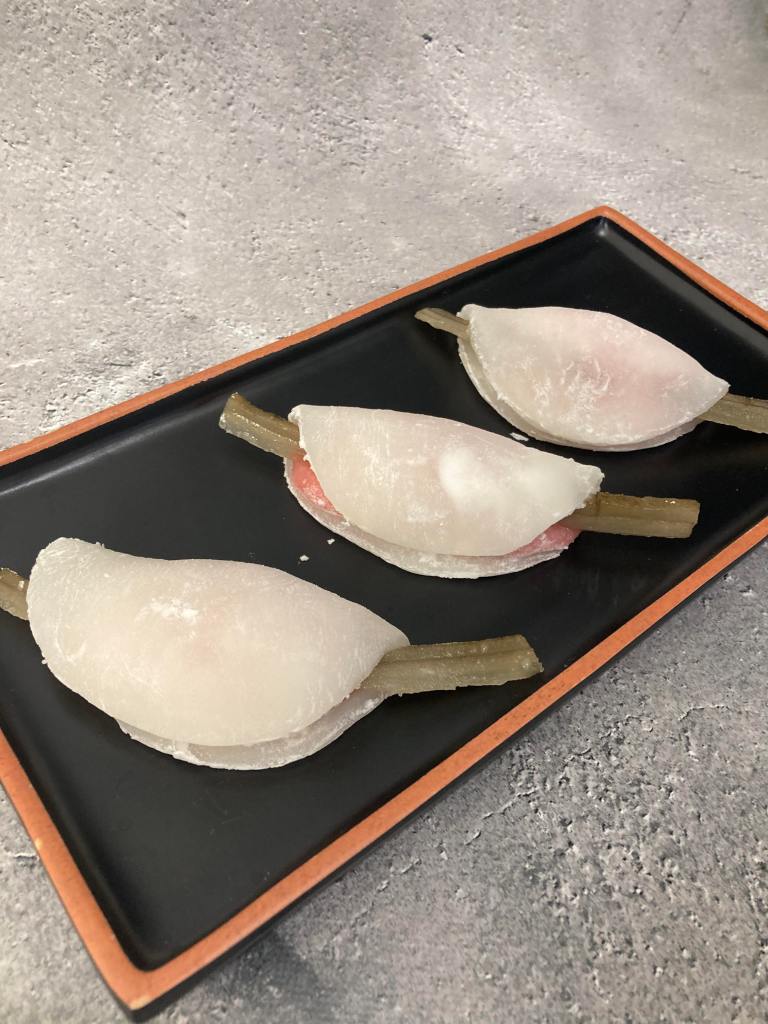
There are many stories behind this Wagashi, like how these shapes formed and why the ingredients such as the vegetables started to be used. One such story says Hanabira mochi was enjoyed during the New Year feast at the Imperial family during Heian-period. There was a traditional custom, called “Hagatame”, (tooth hardening), eat something hard, such as Daikon radish, boar meat, or dried-ayu fish for New Year feast. People believed that having a strong tooth meant you would have a long life. Hanabira mochi is nowadays known to be served at the first tea ceremony of the New Year.
I was in high school when I first had a chance to taste Hanabira mochi at a tea ceremony. It was an eye-opening experience for me, that this sweet has Gobo, burdock, inside. But I really loved it, especially the combination of the earthy taste of gobo and the sweetness of miso-an. Since then, I have been making Hanabira mochi for the new year while overseas. In China, I couldn’t find Gobo at a local store so I ordered them from an online app, Taobao.
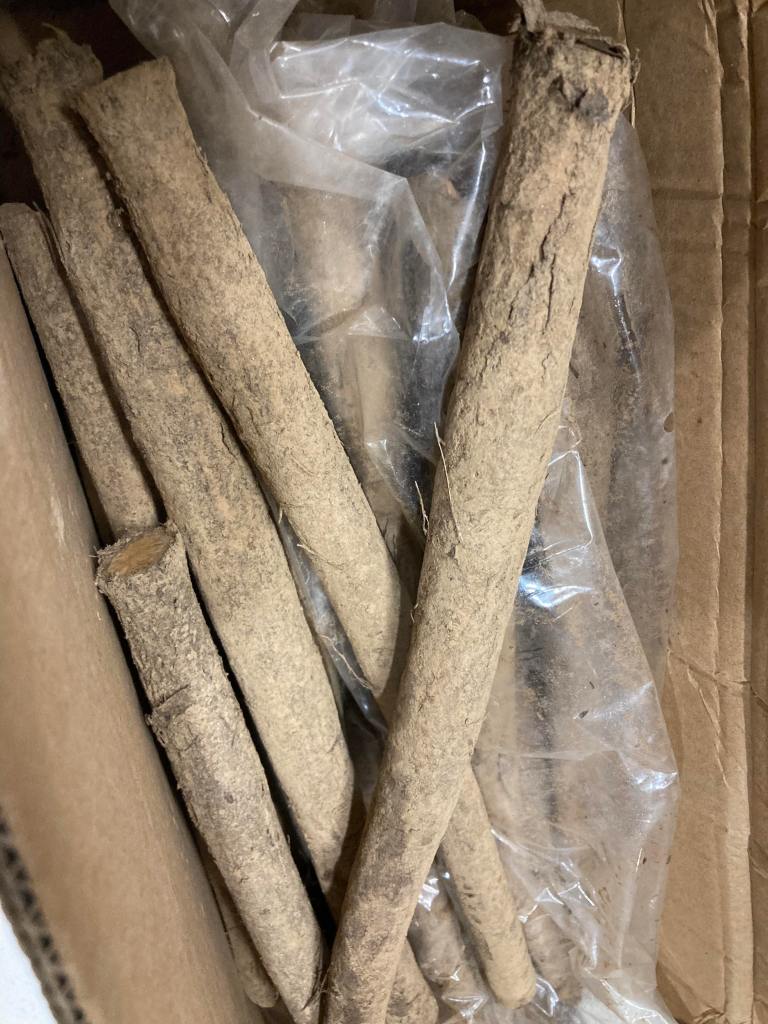
These Gobo were from Suzhou city.
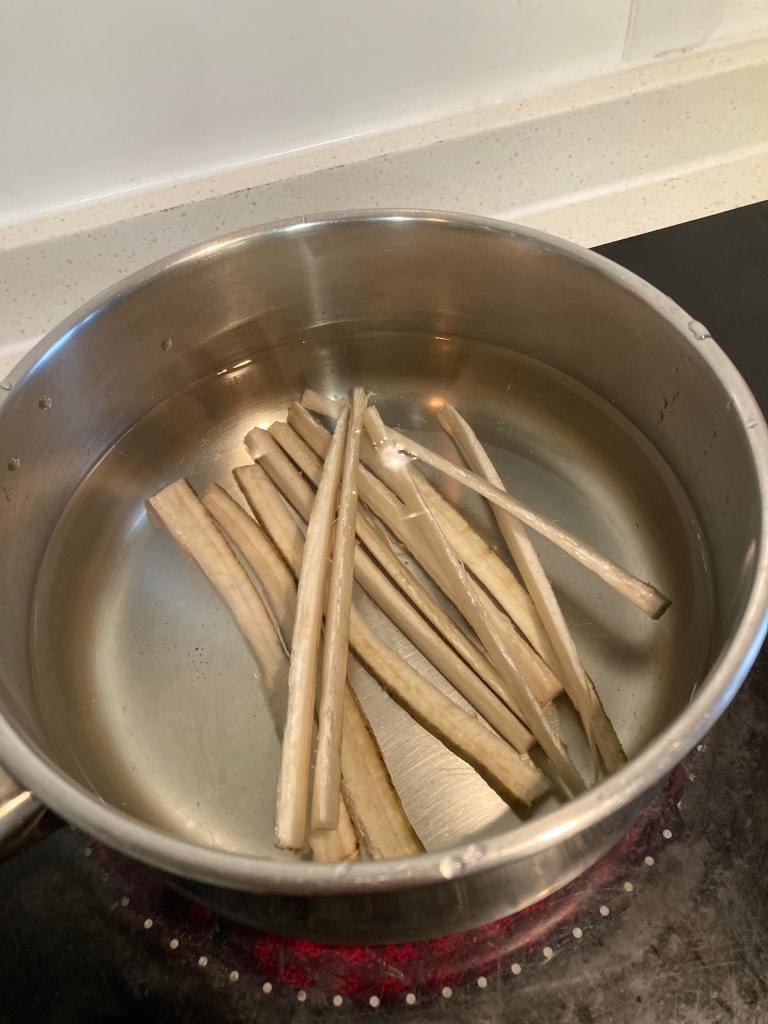
This is a picture of when I was boiling and seasoning the gobo with water and sugar.
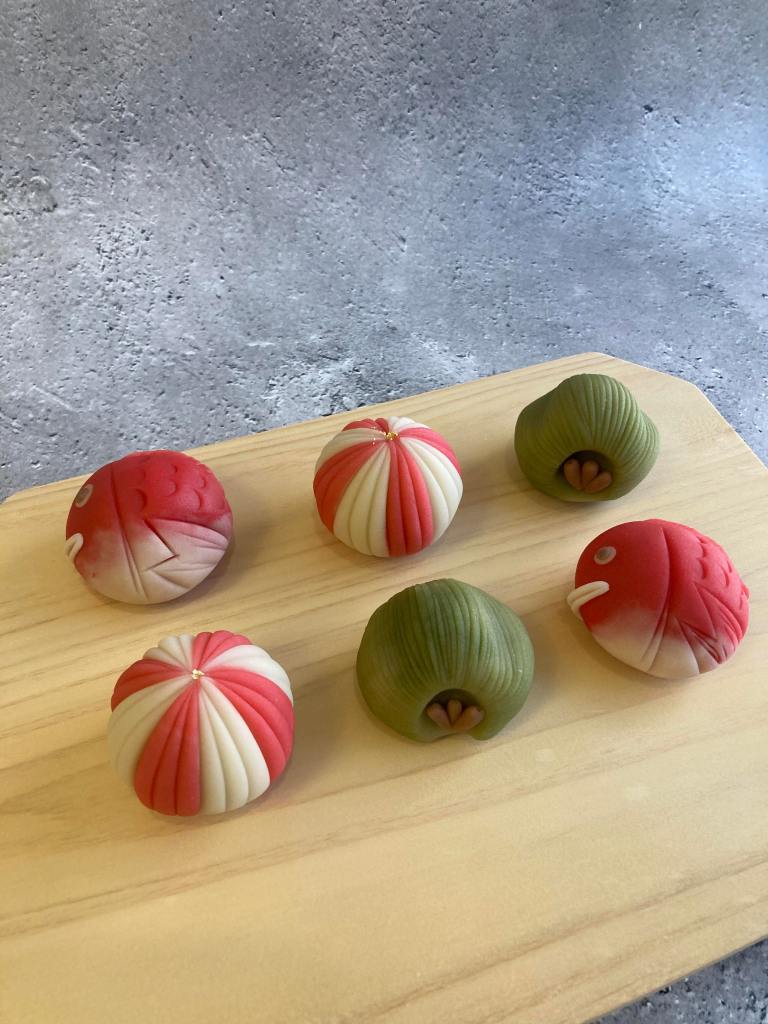
The other type of Wagashi I made is called “Nerikiri Wagashi”. Nerikiri Wagashi is sweet bean dough which is kneaded with soft mochi called Gyuhi filled with sweet adzuki bean paste. These Nerikiri Wagashi are made in different shapes and the designs reflect the passing of the seasons and traditional events. After I learned how to make Nerikiri Wagashi from my Wagashi teacher Hiromi-sensei, I have enjoyed making them for special occasions such as the New Year and traditional celebrations. A unique thing about Nerikiri Wagashi is that each design is named (Kamei 菓銘) after historical events, seasons, or poems, etc. The following names were named by my Wagashi teacher. I hope you enjoy the special name of each Nerikiri Wagashi and the meaning behind it.
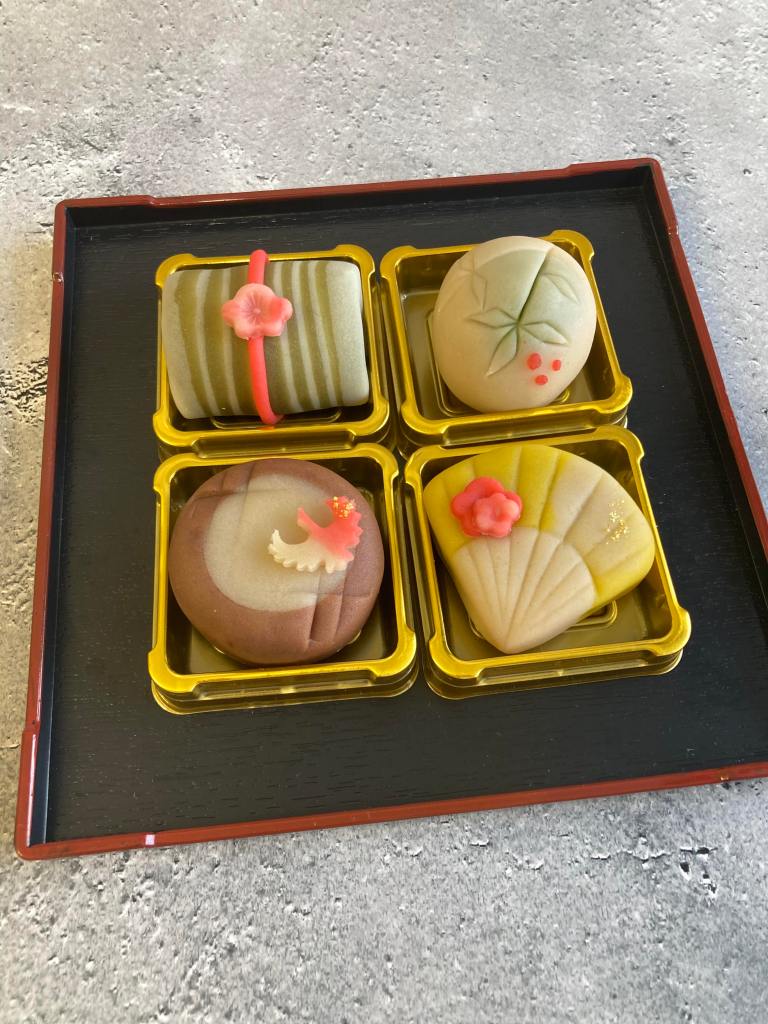
Picture from the left to right…
“Hope” – Kibou (希望)
This design has the combination of a bamboo and plum flower. The bamboo is an evergreen plant that grows straight towards the sky strongly, and the red plum flower is known as the first flower to bloom after the long winter. This Nerikiri Wagashi was named as “Hope-Kibou” and the design represents the meaning that there will always be hope after the long winter, dedicated to your continuous hard work towards achieving your goal.
The next one is named “Luck of red color” – Aka no fuku (赤の福)
The design is inspired by an evergreen shrub called Nanten (南天), commonly known as nandina, which bears round red fruits in the winter. It is said to be an auspicious tree because its name sounds like “to avoid misfortune,” or Nan wo Tenzuru (難を転ずる) in Japanese.
Again looking at the above picture, the Wagashi in the bottom right is:
“Looking through a round window “Enso no Muko Niwa (円窓の向こうには)
This paints the image of looking through a Japanese temple’s round window and seeing the beautiful garden and the winter scenery.
Suehiro (末広)
Suehiro refers to a folding fan called Sensu. Sensu is also carried during ceremonial events in Japan. It has a congratulatory meaning of “prosperity” and “success,” and the image that comes to mind is a Sensu gradually opening to its fullest.
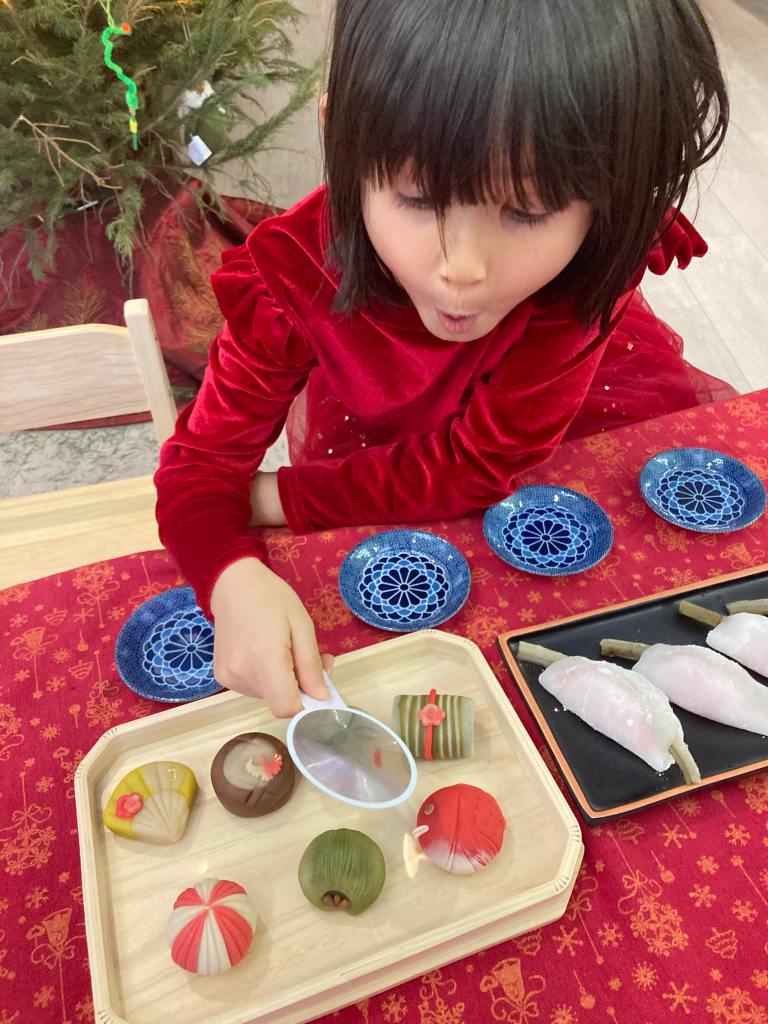
My daughter was checking out with the magnifying glass one of the Nerikiri Wagashi that she wanted to eat!
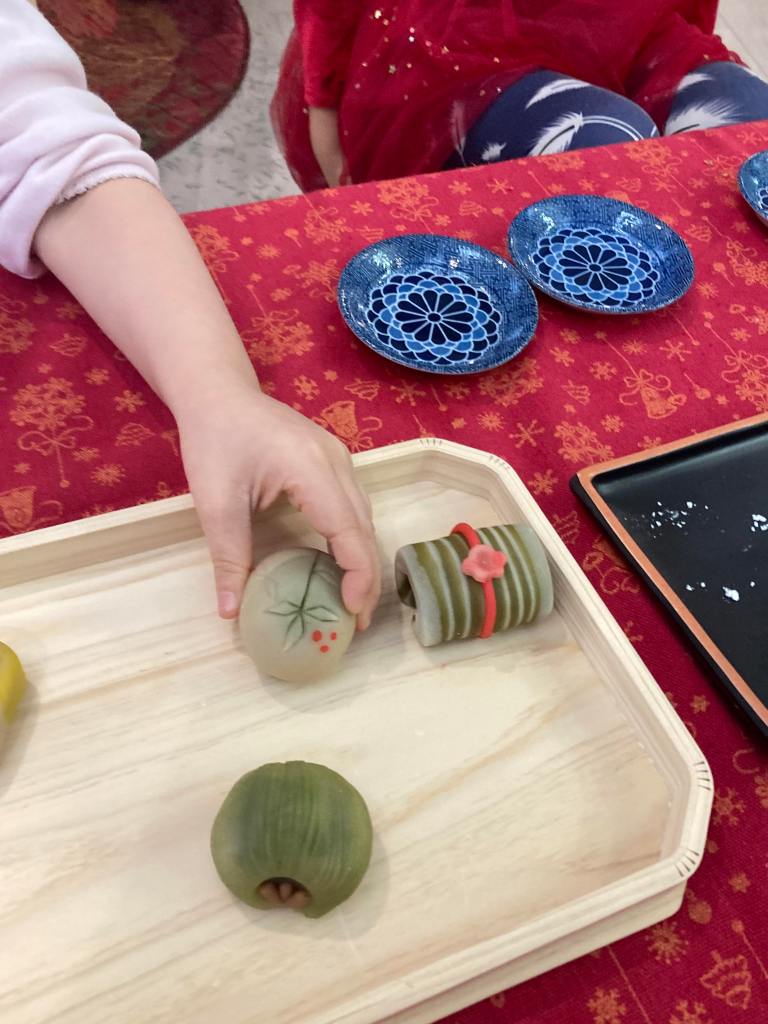
My youngest was saying “I want this one!!”
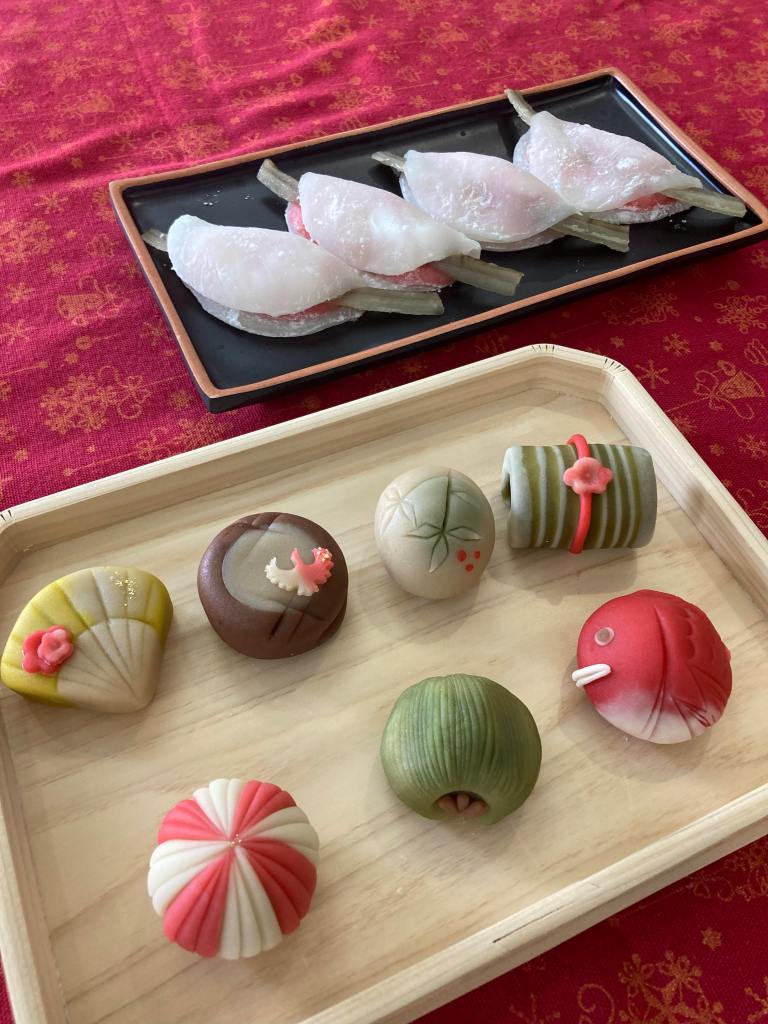
We are full of the Japanese sweets after Osechi-ryori!!
I hope everyone had a great new year’s eve and new year’s day!
Thank you for reading my blog!!
 sachiwagashi.com